

Key Conditions to Consider When Applying Fluorinated Materials
In demanding industrial scenarios such as semiconductor processing, precision manufacturing, automation equipment, new energy and high-end automotive components, fluorinated materials have always been a core category among specialty industrial materials. With exceptional high/low temperature resistance, corrosion resistance, low volatility, stable insulation, non-stick and hydrophobic properties, and aging resistance, fluorinated greases, coatings and seals are long used in extreme conditions where ordinary materials cannot perform.
Based in Shanghai and specializing in high-performance specialty materials, XIFUTE focuses on the selection and technical service of industrial materials including fluorochemicals, silicone materials, lubricants & grease and adhesives — long serving customers in electronics & electrical, semiconductors, precision equipment and industrial maintenance. Drawing on years of frontline sampling, mass-production support and equipment maintenance experience, we have summarized the key conditions to focus on when applying fluorinated materials — helping companies select and use materials precisely and properly, effectively reducing R&D trial and error and mass-production risks.
1. Match the Operating Temperature Range — Avoid High-Temperature Failure and Low-Temperature Hardening
Temperature is the foremost condition in fluorinated material selection and the key to service life. Unlike ordinary industrial materials, fluorinated materials excel in extreme temperature ranges — but different formulations and categories vary enormously in their high/low temperature limits. Some general-purpose fluorinated materials only suit conventional high temperatures and cannot withstand the instantaneous ultra-high temperatures of semiconductor processes and high-end equipment; only low-temperature dedicated fluorinated materials can meet the flexible operation needs of cold-chain equipment and outdoor extreme cold.
If selection ignores actual extreme temperatures and refers only to average temperatures, problems easily arise: grease volatilization and bleeding, coating aging and cracking, seal hardening and failure at high temperatures — or material hardening, increased friction, equipment jamming and noise at low temperatures. In its selection services, XIFUTE precisely verifies each customer's continuous operating temperature, instantaneous extremes and temperature cycling frequency, strictly matching fluorinated materials of the corresponding temperature rating with ample performance margin — ensuring stable operation across the full temperature range.
2. Confirm the Media and Corrosive Environment — Adapt to Acid, Alkali, Solvent and Moisture Conditions
The core application advantage of fluorinated materials is resistance to chemical corrosion, solvents, acids and alkalis — suiting complex chemical, process and sealed corrosive conditions. But different fluorinated formulations differ markedly in media resistance. In industrial scenarios, equipment frequently contacts chemical solvents, acid and alkali mists, cleaning agents, moisture and oils — ordinary materials are easily corroded, swollen or aged, while properly matched fluorinated materials deliver long-term protection.
It is critical to note that not all fluorinated materials can handle strong corrosive or strong solvent environments — some general-purpose versions only suit ordinary moisture and weak acid/alkali scenarios. Misusing ordinary fluorinated materials in high-intensity chemical media conditions still leads to swelling, detachment and protection failure. For special scenarios such as semiconductor corrosive processes, chemical equipment and precision cleaning equipment, high-media-resistance dedicated fluorinated materials must be specifically selected — eliminating corrosion hazards at the source.
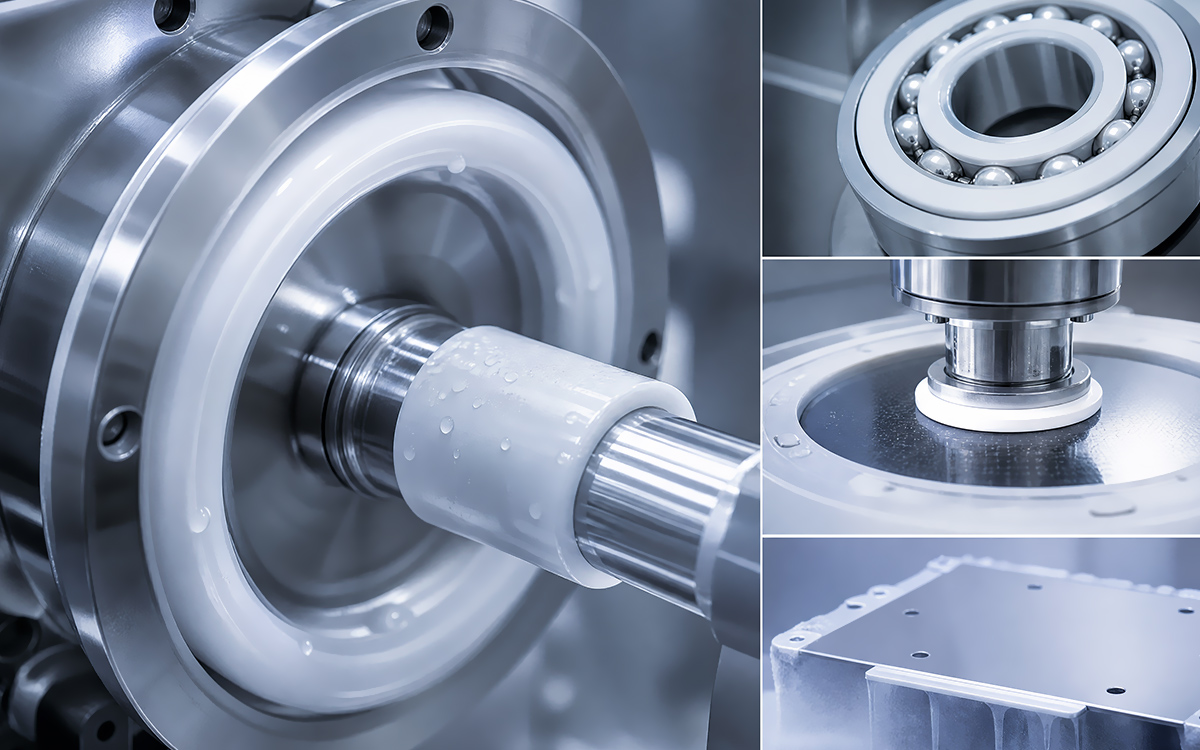
3. Consider Mechanical Load and Motion Type — Match Wear Resistance and Pressure Endurance
Scenarios such as precision transmission parts of automation equipment, robot joints, high-speed bearings and high-pressure sealing structures place extremely high demands on fluorinated materials' pressure resistance, wear resistance and shear resistance. Operating parameters differ greatly between equipment — high-speed rotation, high-frequency reciprocation, high-pressure loading and low-speed friction each require fluorinated materials with completely different viscosity, hardness and anti-wear formulations.
High-speed light-load conditions need low-resistance, low-volatility, free-flowing fluorinated lubricants to reduce running resistance and temperature rise; high-pressure heavy-load conditions need high-viscosity, high-pressure-resistant fluorinated materials that resist bleeding — avoiding high-pressure extrusion, lubrication film breakage and dry friction wear. Blind selection that ignores mechanical load and motion type leads to excessive material consumption, equipment noise and jamming, and accelerated component wear — sharply increasing maintenance costs.
4. Strictly Control Cleanliness Class — Meet High-End Precision Process Requirements
High-end scenarios such as semiconductor processing, precision electronics, cleanrooms and optical equipment impose hard standards on fluorinated materials' cleanliness, low extraction and dust-free properties. Ordinary fluorinated materials made with simple processes easily generate trace dust and volatile extractables — directly contaminating precision wafers, electronic components and optical lenses, and reducing product yield.
High-end processes must use dedicated fluorinated materials that are high-purity, low-volatility, ionic-extraction-free and cleanroom-rated, meeting industry cleanliness standards. XIFUTE's imported fluorochemicals all undergo strict cleanliness testing, suit ultra-clean workshop conditions, effectively eliminate micro-contamination risks, and meet the strict production standards of precision manufacturing and semiconductor processing.
5. Pay Attention to Substrate Compatibility — Avoid Detachment, Peeling and Insufficient Adhesion
Many people assume fluorinated materials are highly universal and suit all substrates — a typical selection misconception. Different substrates such as metals, plastics, ceramics, composites and coated surfaces vary enormously in surface tension and adhesion characteristics; some fluorinated materials themselves have extremely low surface energy, easily causing weak bonding, peeling, detachment and insufficient fit.
In coating, sealing and bonding applications, substrate properties must be confirmed in advance, and suitable modified fluorinated materials or matching primer processes selected accordingly — improving the bond between material and substrate, ensuring no detachment or peeling over long-term use, and stably delivering protection, lubrication and sealing.
6. Verify Compliance Standards — Meet Industry Qualification and Traceability Requirements
As fine specialty chemicals, fluorinated materials' environmental compliance and safety qualifications are the basic prerequisite for mass-production application. Industries such as electronics & electrical, automotive manufacturing, export equipment and semiconductors impose strict requirements on RoHS and REACH environmental compliance, safety certification and production traceability.
XIFUTE provides complete TDS technical parameters, MSDS safety documents, RoHS environmental reports and COA batch quality certificates for all its fluorinated materials — ensuring complete documentation, traceable batches and controllable compliance throughout, fully meeting customers' needs for factory audits, mass-production filing and product export.
Precise Condition Matching Maximizes the Value of Fluorinated Materials
The high performance of fluorinated materials is built on precisely matching operating conditions. Temperature range, corrosive media, mechanical load, cleanliness class, substrate compatibility and compliance standards — none of these six core conditions can be missing. Precise selection not only eliminates production hazards and improves product and equipment stability, but also greatly reduces the combined costs of long-term maintenance, repeated trial and error and batch defects.
XIFUTE has long adhered to a differentiated service model: for R&D customers, focusing on model screening, performance boundary confirmation, substrate adaptation and sample validation to reduce R&D trial-and-error costs; for manufacturing customers, strictly controlling batch consistency, lead-time stability and documentation completeness, optimizing inventory planning and production costs around line needs — providing customers with full-process integrated solutions from "finding materials" to "using them well".
Going forward, XIFUTE will continue expanding its premium product lines of fluorochemicals, silicones, specialty lubricants and adhesives, improving its technical documentation system and condition adaptation database, and deepening its technical services. Together with customers